 Diabetes In Control. A free weekly diabetes newsletter for Medical Professionals. News and information for Medical Professionals.
- Type 2 Diabetes Remission With Intensive Treatment
- Resveratrol Induces Alteration in Gut Microbiome
- Continuous Versus Flash Glucose Monitoring To Reduce Hypoglycemia In Type 1 Diabetes
- DKA Not Associated With SGLT-2 inhibitors
- Statin-Induced Diabetes In Women
- Use of Diabetes Drug in Aggressive Form of Breast Cancer
Letter from the Editor

About 6-7 years ago, Dr. Oz came on TV touting the benefit of reservatrol for weight loss, and overnight sales went through the roof. He had his own brand and pretty soon every nutritional company had their product on the market. Just like every nutritional product, it worked for motivated patients and did not for others. As much as we thought this was the one pill solution, it wasn’t. Although patients still take reservatrol, it is no longer the darling of the weight loss world it once was.
This week, our University of Colorado Pharm D. Candidate Mark Lawrence is presenting some research he did on how reservatrol may have a future role in helping control glucose levels in overweight and obese patients. Check out Item 2 to find out what he learned.
*****************************
We can make a difference!
*****************************
Dave Joffe
Editor-in-chief
This Week's Survey
For your patients using metformin, do you assess their Vitamin B12 levels?
Follow the link to share your response.
New Product: Do You Know What An eBike Is?
DR. MED. LUDWIG GEIGER, Medical Director of the corratec LIFE:
“I had the opportunity to implement my many years of medical and scientific experience with the development of corratec LIFE. Cycling is one of the healthiest sports with high-energy consumption and positive effects on the cardiovascular system. In addition, you can re-live with the Corratec LIFE and break through the social isolation. You can go shopping. Thanks to the variable support of the electric motor it is also possible to undertake excursions with the family, friends and acquaintances with reduced condition and do something good for your body. It’s about your health and well-being. ”
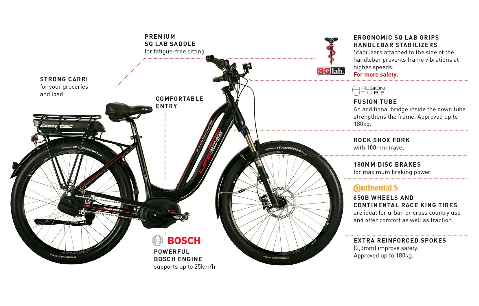
Click to view image at full size.
Steve Freed, Diabetes Educator, Publisher: I recently had the opportunity to ride this eBike from Corratec. I have always been a bike enthusiast, but this bike really changed my mind on using this bike to reduce the risk for cardiovascular disease and even to help blood sugars and even prevent diabetes. At first I thought it was cheating using an eBike with battery power. But this is a pedal-assisted bike, so you have to pedal if you want to go anywhere. It even has automatic shifting, which makes the ride safer, smoother and more enjoyable. So now I can ride further and even faster, and the bike allows me to keep up with people 20-40 years younger than me. I get to ride with my kids and just enjoy the outdoors. If you would like to get back to riding a bike, this is for you. www.life-bike.com
Read Dr. Sheri Colberg’s review of the Corratec Life Bike.
For more information, email: philipp.riebold@life-bike.com
Test Your Knowledge
Which one of the following is an advantage of a glucagon-like peptide-1 (GLP-1) receptor agonist over mealtime insulin?
A. Less hypoglycemia
B. Fewer injections
C. Less weight gain
D. All of the above
Follow the link to see the correct answer!
Did You Know: Smart Insulin GRI (Glucose Responsive Insulin) – The Holy Grail
There was a special event with academic experts, researchers, industry JDRF and funding organizations to discuss the current information on glucose responsive insulin also known as “smart insulin.” The highly interactive event brought together academic experts, researchers, industry, funding organizations, and patient advocates, including our own Kelly Close, to discuss the current state of the glucose responsive insulin field (also known as “smart insulin”). In theory, this next-generation insulin would work automatically in response to blood glucose: the higher the blood sugar, the more insulin is released or activated, and the lower the blood sugar, the less insulin is released or activated.
The idea of the “perfect” smart insulin is very compelling for people with diabetes on insulin: one injection per day, blood sugar levels that stay in zone without hypoglycemia, no more carb counting, no more guessing what dose is correct, no more feeling frightened, and a much safer and less stressful life. Plus less need for hours with a diabetes educator. The reality, as the leaders emphasized at this meeting, is that glucose responsive insulin (GRI) is still in its infancy, and development will likely proceed in steps: the first generation of these drugs may offer some, but not all, of the anticipated benefits. It was agreed that a perfect glucose-responsive insulin could eventually be an enormous game-changer for people with diabetes. In the discussion, they described an ideal GRI as a once-daily therapy that delivers the right amount of insulin at the right time in the right part of the body, leading to in-range blood sugars with little to no risk of hypoglycemia. But, like everything else, the first GRI may not have everything we would like and it probably will have to wait for the second-generation GRI.
It was agreed that a first-generation GRI would be a meaningful advance prior to development of the ideal product. There was some debate over exactly what that first product should look like. So they stated that most likely that the characteristics for the first-generation GRI would have the following benefits:
- Helps with meals, but may still require basal insulin
- Once or twice daily injection
- Glucose monitoring 2-3 times daily
- A1c reduction of 0.5%, similar effects to current insulins
- A target of 80% time in the 90-150 mg/dl range
- Less than 5 hypoglycemic events per week
- Weight gain of ~0.5 kg (about one pound), comparable to current insulin therapies
The next or ideal generation would be more like this:
- No other insulin use required
- Once daily injection
- Glucose monitoring 0-1 times per day
- A1c reduction of ~0.7%, superior to current insulins
- ~80% time in range (70-130 mg/dl)
- One or less hypoglycemic events per month
- Minimal weight gain
- Reduced diabetes-related stress
- No severe product-related complications with chronic use
Other proposed ideas for first-generation GRI products included (i) a combination of two different insulins, one for low glucose levels and one for high glucose levels; (ii) as many as five products approved for different populations (i.e., athletes vs. pregnant women vs. those with high hypoglycemia unawareness); (iii) a product approved only for type 2 diabetes; (iv) a post-meal GRI added on to existing basal insulin; and (v) a basal GRI added on to existing basal insulin. It is just a matter of time before we see the Smart Insulins
An overview of the companies and academic groups with GRI candidates in development shows over 11 groups currently working on smart insulin projects. All of these projects are at a very early stage: one (Merck’s MK-2640) is in its first study in humans, and the others are all still being tested in animals. The groups all have very different approaches to GRI development, ranging from a smart insulin patch (UNC/NC State) to glucose-sensing nanoparticles (Monash University). All three major insulin companies – Sanofi, Lilly, and Novo Nordisk – are working on smart insulin as well, with Lilly recently acquiring smart insulin technology from the startup company Glycostasis in February 2016.
Theory proposed that type 2 diabetes can be reversed in the short term with medical approaches over bariatric surgeries.
Changes in gut microbiome may improve blood glucose levels in obese
Continuous glucose monitoring may reduce hypoglycemia fear.
Study reported SGLT2 Inhibitors monotherapy might not lead to DKA events as opposed to insulin therapy.
Risk of type 2 diabetes heightened in elderly women with increase in statin dose.
Epalrestat, an AKR1B1 inhibitor for diabetic patients inhibits progression of BLBC
Quote of the Week!
“It does not matter how slowly you go as long as you do not stop.”
…Confucius
Diabetes in Control gratefully acknowledges the assistance of the following pharmacy doctoral candidates in the preparation of this week’s newsletter:
Mark T. Lawrence, University of Colorado-Denver, School of Pharmacy NTP
Tenzing Dolkar, Lake Erie College of Osteopathic Medicine, School of Pharmacy
Your Friends in Diabetes Care
Steve and Dave
Diabetes In Control
810 Bear Tavern Road Suite 102
Ewing, NJ, 08628
USA
www.diabetesincontrol.com