 Diabetes In Control. A free weekly diabetes newsletter for Medical Professionals. News and information for Medical Professionals.
Letter from the Editor

When you think of the holidays, everyone’s mind often drifts to gifts, whether it is a husband thinking what to get his wife or a child thinking about a new game they have to have. Regardless of whether you are are on the giving or receiving side, it would be impossible to get through the season without wanting the latest technology. It seems like diabetes device companies think that this is the time of year that everyone will want a gift of technology. This year is no different, and this week we have 3 new devices that, according to their manufacturers, will revolutionize diabetes care.
The best idea would be to use these devices in our prediabetes patients, as a new retrospective look at this condition shows an increase in all-cause mortality.
*****************************
We can make a difference!
*****************************
Dave Joffe, Editor-in-chief
This Week's Survey
When do you think there might be a cure for type 1 diabetes?
1. Less than 5 years
2. Less than 8 years
3. Less than 10 years
4. More than 10 years
Follow the link to share your opinion and see what your colleagues think.
Newsflash: Lantus Biosimilar Basaglar Now Available for Type 1, Type 2 Diabetes
 Lilly and Boehringer now have a Lantus Biosimilar available. Basaglar is available as a 100 Units/mL (U-100) strength in 3mL prefilled KwikPens in 5-count cartons.
Basaglar is a long-acting insulin with an amino acid sequence that is the same as Lantus, another insulin glargine 100 Units/mL product. It was initially approved by the Food and Drug Administration (FDA) in December 2015.
The primary activity of insulin, including insulin glargine, is regulation of glucose metabolism. Insulin and its analog lower blood glucose by stimulating peripheral glucose uptake—especially by skeletal muscle and fat—and by inhibiting hepatic glucose production. Insulin inhibits lipolysis and proteolysis, and enhances protein synthesis. Cost saving should be at least 15% or more over Lantus insulin.
Newsflash: Synjardy Approved for Type 2 Patients
The FDA approved the use of Synjardy® XR (empagliflozin and metformin hydrochloride extended-release) tablets for adults with type 2 diabetes. SYNJARDY XR, from Boehringer Ingelheim and Eli Lilly and Company, is indicated to improve blood sugar in adults with type 2 diabetes when used along with diet and exercise and when both empagliflozin and metformin can be taken.
New Product: “GlySens” Implantable CGM (ICGM)
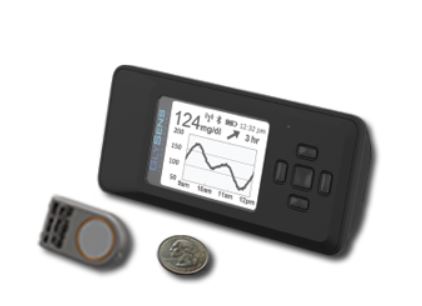 2 weeks ago, we provided information on the Sensonics implantable CGM. Now, we have another implantable CGM that is in development. GlySens is developing a truly long-term continuous glucose monitoring system (expected life is one year or longer, demonstrated up to 18 months in preclinical studies) intended to dramatically improve the lives of people with diabetes. The basic system is comprised of two elements: (1) the fully implanted sensor (designed for long operational life) and (2) an external receiver with monitor. The external receiver is designed to offer a convenient means for continuous, at-a-glance glucose display, recording, and alerts regarding hypo- or hyperglycemic glucose excursions.The GlySens long-term ICGM System needs only a brief outpatient procedure to insert the sensors, and then is designed to work continuously, for an expected period of 12-18 months, with only occasional need for calibration anticipated. Other continuous glucose monitor needle-sensor approaches must be replaced every 3-7 days and require frequent calibration during use. What makes this system different is that the implant contains two independent detectors: the first measures glucose through a specific chemical reaction involving glucose and oxygen, which is monitored by an electrochemical “main” detector; the second is a “reference” detector that monitors background tissue oxygen levels. The system’s electronic circuitry automatically determines glucose levels by computing the difference between the signals from these two detectors. This approach is employed to reduce effects of secondary factors such as temperature and blood flow in the surrounding tissues and effects due to the body’s normal mild encapsulation response to the implant.
Test Your Knowledge
Please select the drug class that best fits the description.
This drug class is universally effective at reducing plasma glucose levels:
1. DPP-4 inhibitors
2. SGLT-2 Agonists
3. Dopamine-2 Agonists
4. Insulin
Did you get it right? Follow the link to find out!
Did You Know: Why Men Are More Prone To Type 2 Diabetes Than Women
Researchers said men could be more prone to type 2 diabetes as they accumulate more iron than women. As compared to one-fifth of women, two-fifth of men were at risk of the disease. Iron is a micronutrient, which is required in the formation of some essential body proteins and enzymes, like hemoglobin, cytochromes and peroxidase. Though it is harmful when stored in excess in the body, it promotes the release of free radicals that damage the secretion capacity of beta cells of the pancreas that produces insulin. The findings said it also decreases insulin sensitivity in peripheral tissues and organs involved in glucose metabolism. The study showed that men have 61% higher prevalence and 46% increased risk of developing type 2 diabetes when compared with women. Excess body iron accumulation is a known risk factor of type 2 diabetes in hereditary hemochromatosis — a disorder that causes the body to absorb too much iron from the diet. However, the study showed that even mildly elevated body iron contributes to the prevalence and incidence of type 2. This excess iron was found to disturb the glucose metabolism in the body. On the other hand, moderate iron stores were found safer than depletion toward iron deficiency. Iron depletion toward deficiency did not offer protection against type 2 diabetes. The type of association between iron stores and the risk of type 2 diabetes showed that the risk was lowest on moderate levels, the researchers said. — Journal Annals of Clinical Biochemistry, Dec 2016
Study data show fasting glucose concentrations of at least 100 mg/dL (5.6 mmol/L) or an HbA1c of at least 5.7% (39 mmol/mol) were determining factors.
Possible future of diabetes management for the masses may have finally arrived, but will patients use the programs and will insurers pay?
The results from a new study show that risk increased in women with an early HbA1c of at least 5.9% regardless of a gestational diabetes diagnosis later in pregnancy.
Liraglutide, on top of stable renin angiotensin system (RAS)-inhibition, is associated with significant reduction in albuminuria among patients with type 2 diabetes and persistent microalbuminuria.
Study offers at least partial explanation for opposing findings between previous observational studies.
Guest Post by David Kliff, Editor, Diabetic Investor
Never let it said that this wacky world is devoid of some strange facts. Back in the day, it was discovered that exenatide was derived from Gila Monster saliva. Today GLP-1 therapy is one of the fastest growing segments of the diabetes drug market.
Quote of the Week!
“Give yourself something to work toward – constantly.”
…Mary Kay Ash
Your Friends in Diabetes Care
Steve and Dave
Diabetes In Control
810 Bear Tavern Road Suite 102
Ewing, NJ, 08628
USA
www.diabetesincontrol.com