 Diabetes In Control. A free weekly diabetes newsletter for Medical Professionals. News and information for Medical Professionals.
A potentially ground-breaking treatment for nerve damage caused by diabetes has shown promising results in preclinical and early patient trials.
Read More »Survey: Patient/Physician Disconnect on Diabetes Management
Washington, D.C. – Limited understanding of disease progression and frustration with disease management contribute to the clinical challenge of meeting the rising type 2 diabetes epidemic in America, according to the Diabetes Roundtable.
Read More »Report: Gardenia Fruit Compound Starting Point For Diabetes Therapy
A Gardenia fruit extract traditionally used in Chinese medicine to treat the symptoms of type 2 diabetes does indeed contain a chemical that reverses some of the pancreatic dysfunctions that underlie the disease, researchers report in the June 7, 2006, Cell Metabolism. The chemical therefore represents a useful starting point …
Read More »Physical Activity Linked to Improved Glucose Control in Children With Type 1 Dia
Children with type 1 diabetes who exercise regularly may have improved blood glucose levels compared with those who do not, and regular physical activity does not appear to increase the risk of severe hypoglycemia (low blood glucose levels), according to a report in the June issue of Archives of Pediatrics …
Read More »Researchers Pinpoint Causes of Adverse Reactions to Popular Type 2 Diabetes Drug
Used by several million people worldwide, rosiglitazone (RSG) is an oral agent that helps patients with type 2 diabetes maintain good blood glucose levels by improving how their bodies use insulin.
Read More »Abnormal Glucose Metabolism May Contribute to Chronic Nerve Disorder
Abnormal glucose metabolism, which occurs when the body has difficulty processing sugar (glucose) into energy, is twice as common among patients with chronic nerve dysfunction of unknown cause than among the general population and may be a risk factor for the condition, according to a study posted online today that …
Read More »Study: Brain Function Not Impaired By Tight Diabetes Control and Hypoglycemia
The landmark Diabetes Control and Complications Trial (DCCT) funded by the National Institutes of Health, which followed 1,441 people with type 1 diabetes for a decade until 1993, showed conclusively that tight blood glucose control significantly reduces the risk of developing complications of diabetes such as eye, kidney and nerve …
Read More »Report: Increased Sensitivity To Nerve Signals Keeps Diabetes at Bay
Nerve signals relayed directly to the pancreas after eating a meal play a critical role in normal blood sugar control, according to a report in the June 7, 2006, Cell Metabolism. Therefore, drugs that increase the sensitivity to such signals might offer a new approach to diabetes treatment, the researchers …
Read More »Joslin Discovers Signs of Residual Islet Cell Function in People with Long-Term
Scientists at Joslin Diabetes Center have discovered that a surprisingly high percentage of people with type 1 diabetes (insulin-dependent) who have had the disease for 50 years or longer (The Joslin Medalists) may still have residual functioning, insulin-producing islet cells and/or islet cell antibodies.
Read More »Dexcom Receives FDA Approval For STS™ Continuous Glucose Monitoring System
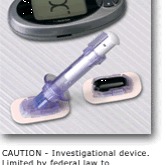
Dexcom Receives FDA Approval For STS(TM) Continuous Glucose Monitoring System – a first generation device designed to help people with diabetes more conveniently and effectively manage their blood sugar levels. This is the second CGMS that has hit the market, and you can expect at least one more this year. …
Read More »