 Diabetes In Control. A free weekly diabetes newsletter for Medical Professionals. News and information for Medical Professionals.
- Preserving Beta-cell Function in Youth Newly Diagnosed with Type 2 or Prediabetes
- New First-In-Class Drug For People with Type 1 Diabetes
- Canagliflozin in Patients with Diabetes and Kidney Disease
- Gut Flora Composition and Abundance Differs in Diabetes
- Poor Glycemic Control Increases Infection Risk
- Vitamin D Deficiency and Diabetic Peripheral Neuropathy
Letter from the Editor

Over the last 25 years, we have been looking for add-on therapies to help our type 1 patients control their glucose without increasing the risk of hypoglycemia. As we have gotten better insulins and monitoring devices, there has been an intensification of control and that often leads to greater changes of low glucose. We have tried to find ways to improve control without increasing the risk of hypoglycemia. Years ago, clinicians tried to add a TZD, thinking that the increased insulin sensitivity would lead to better values, and then we had the amylin analog, that seemed to work but added 2 to 3 more injections a day. Lately, we have tried adding either a GLP-1 or an SGLT-2 inhibitor hoping to decrease glucose uptake, with some success.
The holy grail of treatments could be a drug that increases the uptake of glucose into the cells independent of insulin or insulin sensitizers. This week, our Pharm. D. Candidate from LECOM School of Pharmacy, Michael Zaccaro, brings us information on the polyclonal antibody mixture, Subetta, which is in Phase 3 clinical trials and works by a totally different mechanism. This could be the first in a new class of drugs that makes increased control possible.
*****************************
We can make a difference!
*****************************
Dave Joffe
Editor-in-chief
This Week's Survey
When pricing for CGM systems comes down to less than using a blood glucose monitor with strips, will you recommend these to your patients who do not take insulin?
– Yes
– No
– For my patients who are motivated
– For my patients who are not motivated
Follow the link to see how you and your colleagues compare.
New Product: Novo Nordisk to Launch Two Smart Insulin Pens
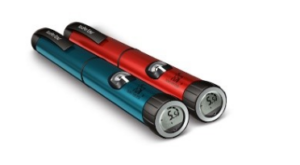 Novo Nordisk will partner with Dexcom, Glooko, Roche, and IBM Watson Health to help patients manage diabetes data. As it introduces two new connected insulin pens, the company has struck a deal with Flex Digital Health to use their Bright Insight platform, which focuses on managing connectivity and compliance for regulated digital health devices.
The new devices, dubbed the NovoPen 6 and NovoPen Echo Plus, are slated to roll out worldwide starting early 2019. The insulin pen will be connected to the patient’s smartphone. By doing so, the pen will send data into the phone and integrate with diabetes management platforms, allowing the patient to track trends in their insulin use and discuss them with their diabetes health care professionals. Eventually, the connectivity opens the door for algorithms that could help patients dose properly or give notifications that could prompt them to stay with the treatment they are using. Lilly, Sanofi, and others are expected to follow shortly with smart pens of their own.
Test Your Knowledge
Which of the following is accurate regarding the treatment and management of hypertriglyceridemia?
A. Pharmacologic therapy is typically initiated before lifestyle modifications in the treatment of primary and secondary dyslipidemia.
B. Patients can be treated before hypertriglyceridemia is confirmed.
C. Niacin raises LDL cholesterol levels.
D. High-potency statin monotherapy is recommended for severe or very severe hypertriglyceridemia.
Follow the link for the answer.
Fact: Late Dinner Contributes To Cardiometabolic Risk and Prediabetes in Hispanic/Latino Population
A population-based study of Americans of Hispanic/Latino descent found that those who consumed at least 30% of their daily calories after 6 p.m. faced 19% higher odds of prediabetes (OR 1.19, 95% CI 1.03-1.37) and a 23% higher risk for hypertension OR 1.23, 95% CI 1.05-1.44) than those who ate less after 6 p.m. Eating a late dinner may contribute to cardiometabolic risk. This the first study that suggests that when you eat matters. Even though eating in the evening was not associated with overweight, obesity, or central adiposity, the study showed that, compared with other participants, late eaters had higher levels of the following:
- Fasting glucose (93.7 versus 93.0 mg/dL; P=0.001)
- Insulin levels (12.4 versus 11.6 mU/L; P=0.003)
- Score on the Homeostatic Model Assessment of Insulin Resistance (HOMA-IR; 2.9 versus 2.7; P=0.001)
- Systolic blood pressure (BP; 118.7 versus 117.5 mm Hg; P=0.004)
- Diastolic BP (72.2 versus 71.0 mm Hg; P<0.0001)
These data are from “the first population-based study to demonstrate that consuming a larger proportion of energy in the evening may be associated with reduced glycemic control and higher odds of prediabetes and hypertension in US Hispanics and Latinos,” the investigators noted. The researchers emphasized that the emerging data have highlighted, “that eating at unconventional circadian times is associated with adverse metabolic effects.” The study was presented at the American Heart Association’s Scientific Sessions.
In the Hispanic Community Health/Study of Latinos, researchers evaluated 12,708 participants with an age range of 18 to 76 years. None of the participants had cancer or diabetes. Of these participants, the average daily energy was 35.7% after 6 p.m. More than half reported eating at least 30% of energy after 6 p.m. The researchers gathered evening eating data using time-stamped 24-hour food recall information by evaluating average proportion of energy consumed after 6 p.m. The findings showed that each 1% increase in energy intake after 6 p.m. was associated with the following:
- Higher fasting glucose: (Beta=0.02; P<0.0001)
- Insulin: (Exp[Beta]=1.001; P=0.004)
- HOMA-IR: (Exp[Beta]=1.001; P=0.001)
So as part of our education with patients, it is important to not just advise patients to make healthy lifestyle choices, talking about how much and what we eat, but we should also consider discussing when we eat. We should eat smaller evening meals, avoid consuming a lot of calories in the evening, and reduce night-time eating.
American Heart Association Scientific Sessions; Source Reference: Makarem N, et al “Circadian timing of food intake is associated with cardiometabolic risk in US hispanics/latinos: Results from the hispanic community health study/study of latinos” AHA Scientific Session 2018.
The beta-cell preserving properties of short courses of metformin and insulin glargine evaluated in ever-growing population of patients who have diabetes.
Study assesses effect of new add-on therapy.
Can canagliflozin affect the progression of kidney disease in patients with type 2 diabetes?
The intestinal microbiota in people with type 1 and those with MODY2 differs in abundance and type compared to people without.
Infection risk is high among people with diabetes, but can better glycemic management improve lower infection risk?
Patients with either painful or painless neuropathy found to have low vitamin D levels.
Quote of the Week!
“There’s no happier person than a truly thankful, content person.”
….Joyce Meyer
Diabetes in Control gratefully acknowledges the assistance of the following pharmacy doctoral candidates in the preparation of this week’s newsletter:
Michael Zaccaro, Pharm. D. Candidate 2019, LECOM School of Pharmacy
Angela Reyes, Pharm.D. Candidate, LECOM College of Pharmacy
Your Friends in Diabetes Care
Steve, Dave, and Joy
Diabetes In Control
810 Bear Tavern Road Suite 102
Ewing, NJ, 08628
USA
www.diabetesincontrol.com