 Diabetes In Control. A free weekly diabetes newsletter for Medical Professionals. News and information for Medical Professionals.
- When and When Not to Use An SGLT-2
- Message For Your Patient: Take Your Medicine
- Young Patients With Type 1 Diabetes Have 4x Higher Risk of Early Death
- Air Pollution Causes 250,000 Diabetes-Related Deaths
- ADA Stresses Differences in Care Between Pediatrics and Adults with Type 1 Diabetes
- Engage in Cross-Training to Get More Fit
- By Sheri R. Colberg, PhD, FACSM
Letter from the Editor
 Last week, we celebrated my daughter’s 31st birthday and this week we have a couple of articles related to her.
I was looking for a nice blouse that she had in mind and was in H&M in the mall. While looking in the women’s department, I saw a mom with her preteen daughter and although the child was not even 4 ft tall, her mom had her trying on clothes that were way too big just because they were on sale. Evidently mom must have thought that these were “one size fits all” clothing, and kept telling the girl that the clothes looked fine. This reminded me of the way we manage diabetes, and when it come to kids how we often have them “try on” adult solutions for their care. This week, Melissa Bailey, our USF Pharm D candidate, has an article from our good friend Dr. Desi Shatz on proper diabetes care for all ages.

My daughter also cycles with me and, as is custom, she had to ride her age in miles on her birthday. This is only one of the things she does to stay fit as she subscribes to Dr. Sheri Colberg’s method of using Cross-Training. To see what she does, check out Item 6.
*****************************
We can make a difference!
*****************************
Dave Joffe
Editor-in-chief***
This Week's Survey
For your patients who use CGM software, do you review the reports generated by the CGM software? Follow the link to see how you compare to your colleagues.
News Flash: Potential Signals of Serious Risks/New Safety Information Identified from the FDA Adverse Event Reporting System (FAERS)
The FDA recently updated the Adverse Event Reporting System (FAERS) to include 13 insulin pen products due to people using these incorrectly and not removing the inner needle cover or priming before each dose. The FDA says they are looking into possible regulatory action on these products, as a result. Have your patients review the correct way to use an insulin pen, as seen in this YouTube video.
News Flash: FDA Drug Watch: SGLT2 Inhibitors for Diabetes: Drug Safety Communication Regarding Rare Occurrences of a Serious Infection of the Genital Area
The FDA is warning that cases of a rare but serious infection of the genitals and area around the genitals have been reported with the class of type 2 diabetes medicines called sodium-glucose cotransporter-2 (SGLT2) inhibitors. This serious rare infection, called necrotizing fasciitis of the perineum, is also referred to as Fournier’s gangrene. We are requiring a new warning about this risk to be added to the prescribing information of all SGLT2 inhibitors and to the patient Medication Guide.
Key Facts:
- The FDA is placing a new label warning about FG for all SGLT2is, including canagliflozin (Invokana), dapagliflozin (Farxiga), empagliflozin (Jardiance), ertugliflozin (Steglatro), and their respective combinations.
- FG typically occurs in about 1.6/100,000 US males annually, most often aged 50-79 years (3.3/100,000), and is rarely reported in females.
- Between March 2013 and February 2018, 12 FG cases in SGLT2i-treated people aged 38-78 years were reported to FDA, including five women.
- All were hospitalized and required surgical debridement, Five required more then one surgery and one required skin grafting.
- Four experienced complications and one died.
- Just six FG cases were identified among people taking other glucose-lowering drugs during 1984-2018, all males.
Tool: SGLT-2i Chart
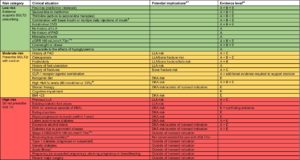 See Article 1 in this week’s newsletter: When and When Not to Use An SGLT-2. Download the SGLT2 chart here.
Test Your Knowledge
Real-time continuous glucose monitoring (rtCGM) facilitates our understanding of the relationship between:
A. Food and blood glucose (BG)
B. Exercise and BG
C. Stress and BG
D. Variation in BG during menstrual cycle
E. All of the above
Follow the link for the answer.
Did You Know: To Eat or Not To Eat Breakfast Before Working Out?
Published findings answer the question whether we should have breakfast before we exercise. The findings showed that a pre-exercise breakfast increases carbohydrate burning during exercise and that this carbohydrate wasn’t just from the breakfast that was just eaten, but, more important, also from carbohydrate stored in our muscles as glycogen. The researchers studied the effect of eating breakfast versus fasting overnight before an hour’s worth of cycling. They also carried out a control test where breakfast was followed by three hours’ rest and volunteers ate a breakfast of porridge made with milk two hours before exercise. Post exercise or rest, the researchers tested the blood glucose levels and muscle glycogen levels of the 12 healthy male volunteers who took part. They discovered that eating breakfast increased the rate at which the body burned carbohydrates during exercise, as well as increased the rate the body digested and metabolized food eaten after exercise. What they discovered was that compared to skipping breakfast, eating breakfast before exercise increases the speed at which we digest, absorb and metabolize carbohydrate that we may eat after exercise. It also tells us that this increase in the use of muscle glycogen may explain why there was more rapid clearance of blood sugar after ‘lunch’ when breakfast had been consumed before exercise. This study suggests that, at least after a single bout of exercise, eating breakfast before exercise may ‘prime’ our body for rapid storage of nutrition when we eat meals after exercise.
References:
Yung-Chih Chen, Rebecca L. Travers, Jean-Philippe Walhin, Javier T. Gonzalez, Francoise Koumanov, James A. Betts, Dylan Thompson. FEEDING INFLUENCES ADIPOSE TISSUE RESPONSES TO EXERCISE IN OVERWEIGHT MEN. American Journal of Physiology – Endocrinology And Metabolism, 2017; ajpendo.00006.2017 DOI: 10.1152/ajpendo.00006.2017
Pre-Exercise Breakfast Ingestion versus Extended Overnight Fasting Increases Postprandial Glucose Flux after Exercise in Healthy Men, is published in The American Journal of Physiology – Endocrinology and Metabolism.
After reviewing evidence, a tool to evaluate benefit and risk has been developed for the use of sodium-glucose cotransporter 2 (SGLT2) inhibitors.
Assessing the costs of not following cholesterol treatment and possible ways to reverse non-adherence
China said to have highest attributable burden of disease due to PM exposure.
Patients diagnosed before 10 years of age show increased risk of mortality and cardiovascular disease than those diagnosed at an older age.
Care plans recommended for children with type 1 diabetes and their caretakers in order to best suit their changing needs.
By Sheri R. Colberg, PhD, FACSM
If you’re like a lot of other people, you may get bored doing the same physical activities day after day. More than half of people who start exercise training programs drop out in the first six months. So, what you do to keep your workouts fresh sometimes matters more for getting the most out of training and staying with it. For these reasons (and more), you may want to consider doing cross-training.
Quote of the Week!
“Wonder rather than doubt is the root of all knowledge.”
…Abraham Joshua Heschel
Diabetes in Control gratefully acknowledges the assistance of the following pharmacy doctoral candidates in the preparation of this week’s newsletter:
Melissa Bailey, Pharm.D. Candidate, USF College of Pharmacy
Clarke Powell, Pharm.D. Candidate 2019, LECOM School of Pharmacy
Your Friends in Diabetes Care
Steve, Dave, and Joy
Diabetes In Control
810 Bear Tavern Road Suite 102
Ewing, NJ, 08628
USA
www.diabetesincontrol.com***