 Diabetes In Control. A free weekly diabetes newsletter for Medical Professionals. News and information for Medical Professionals.
- Coffee Consumption and Mortality: The Final Word
- Obesity and Life Expectancy in Older Diabetes Patients
- Cardiovascular Disease Risk Reduction
- Relationship Between Risk Factors, Age, and Mortality in Type 1 Diabetes Patients
- New Diabetes Technology: Fact and Fantasy
- by David Kliff, Diabetic Investor
- Exclusive: Dr. Stuart Weiss on Drug Treatments and CGMs
Letter from the Editor
 Years ago the number one reason to try something new in diabetes was to benefit the patient. This is what led to new insulins, oral medications and devices like insulin pumps and continuous glucose monitors. All was going well till the PBM’s got involved. Now it all about what is the cheapest way to take care of patients.
This desire to do diabetes care on the cheap has given rise to companies that think if their system is almost as good then it is good enough for most patients.
This week we look at these developments from two angles: first our good friend at Diabetic Investor looks at the “Facts and Fantasies” of care, while Dr. Stuart Weiss shares his ideas on what technologies he wants for his patients.
So grab a big cup of coffee and sit back and read what they have to say.
*****************************
We can make a difference!
*****************************
Dave Joffe
Editor-in-chief
Newsflash: Liquid-filled Intragastric Balloon Systems
The FDA issued an alert to health care providers of five reports of unanticipated patient deaths that occurred with liquid-filled intragastric balloon systems used to treat obesity. Four reports involve the Orbera Intragastric Balloon System, manufactured by Apollo Endo Surgery, and one report involves the ReShape Integrated Dual Balloon System. All five reports indicate that patient deaths occurred within a month or less of balloon placement. In three reports, death occurred as soon as one to three days after balloon placement. At this time, we do not know the root cause or incidence rate of patient death, nor have we been able to definitively attribute the deaths to the devices or the insertion procedures for these devices.– FDA Alert
This Week's Survey
Do you think that a single-payer heathcare system would help to provide better care at less cost? Follow the link to share your opinion.
Coming Soon: Smart Insulin Pens
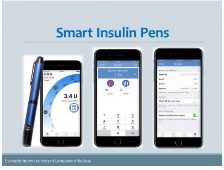 The smart insulin pen “InPen,” recently FDA-approved, will be here soon. A number of companies have “smart pens” in development or are already FDA-approved. They can calculate and track insulin doses, relay data to a smartphone app, and record the time of dosing. They will eliminate the need for manual logging and help patients avoid insulin stacking as it will track the on-board insulin. The “InPen”® is for use with Humalog or Novolog in the treatment of T1D in patients age 12 years and older. It is expected to be available this year. Along with a CGM system, it will be able to replace insulin pumps. — More from Companion Medical, here.
Current Interview
Diabetes in Control speaks with Dr. Stuart Weiss about his private practice experiences and his typical patient recommendations, including how to determine the best possible diabetes drug treatment, embracing CGM systems, and CGM reimbursement.
Test Your Knowledge
Which of the following are strict or relative contraindications to the use of some of the GLP-1 agonists?
A. Multiple endocrine neoplasia (MEN) syndrome type 2
B. Personal or family history of medullar thyroid cancer
C. Pancreatitis
D. All of the above
Follow the link to see the right answer.
Did You Know: Do Fitness Wearables Work?
To see if these fitness wearables actually work to increase our physical activity, researchers did a study that was reported in the American Journal of Health Education. In the 8-week study of teens, they found that the teens became bored just after about four weeks. So instead of motivating them to increase their physical activity, it actually become a de-motivating factor after the initial novelty of wearing a tracker wore off. Their study focused on school pupils, ages 13 to 14, with participants split nearly equally between genders (44 girls and 40 boys), The teenagers were asked to wear a Fitbit Charge wristband for eight weeks, to use the Fitbit app, and to take part in surveys and focus groups, before and after the trial period ended, responding to questions about how they felt about exercising and using the device. The researchers had expected the wearable to have a positive impact on encouraging teens to exercise across a range of different forms of motivation, as well as hypothesizing it would help kids avoid feeling demotivated about physical activity. However, while the researchers record an initial “novelty” bump in interest in physical activity among some participants “for the first few weeks,” the results of the full study were the opposite of encouraging — with participants overall reporting feeling less confident about their competence at exercising, and ultimately discouraged from doing so. Study participants also reported feeling like they had less choice over how to engage in physical activity — which also ended up being a demotivating factor. The data suggests that peer-comparison was a key factor in undermining levels of competence and autonomous motivation. There wasn’t a desire for participants to be more active for themselves and their own goals, or for fun, it was simply because they wanted to beat their friends.
Antioxidants and other polyphenols present in coffee confer healthy benefits to the body, which may include lowering insulin resistance, inflammation and biomarkers of liver function.
The treatment of choice for obese T2D patients is weight loss.
Earlier initiation of diabetes medications can lead to reduced heart disease risk in type 2 patients.
Management of non-glycemic cardiovascular disease risk factors may have increasing benefits in an aging type 1 diabetes patient population with long-term hyperglycemia.
Guest Post by David Kliff, Diabetic Investor. New diabetes technology sounds promising, but will products like One Drop really change patients’ — or payers’ — behavior?
Quote of the Week!
“What you do today can improve all your tomorrows.”
…Ralph Marston
Diabetes in Control gratefully acknowledges the assistance of the following pharmacy doctoral candidates in the preparation of this week’s newsletter:
Josephat Macharia, Doctor of Pharmacy Candidate: Class of 2018; LECOM College of Pharmacy
Your Friends in Diabetes Care
Steve and Dave
Diabetes In Control
810 Bear Tavern Road Suite 102
Ewing, NJ, 08628
USA
www.diabetesincontrol.com