 Diabetes In Control. A free weekly diabetes newsletter for Medical Professionals. News and information for Medical Professionals.
- Elevated 2-Hour Glucose Predicts Cardiovascular Events
- Use of SGLT-2 inhibitors As Adjunct to Insulin In People with Type 1 Diabetes
- Osteoporosis and Diabetes: Pros and Cons to Antidiabetic Regimens
- Reducing Insulin Use and Improving Glycemic Control Via Single Dose of Glucagon-Blocking Drug
- Unlikely Outcomes in Elderly Patients Using Polypharmacy
- Current Interview: Dr. Bruce Bode on the Artificial Pancreas and Diabetes Pumps
Letter from the Editor
 Twenty-one years ago, when Steve and I were still trying to spell the word “diabetes” correctly, there was a young endocrinologist in Atlanta who was setting the diabetes world on its ear by using insulin pumps on patients before it was the last resort. I will never forget the presentation that featured his office with the “Pumps are Us” logo over the door.
Dr. Bruce Bode was that young doc, and over the years his name has become synonymous with cutting edge technology. Dr. Bode has always been a good friend, and while he was at the recent ADA Scientific sessions he sat down with Steve Freed, and gave him an incredible interview on insulin technology and where we are now, and what the future holds.
*****************************
We can make a difference!
*****************************
Dave Joffe
Editor-in-chief
This Week's Survey
Which additional test do you prefer to use when doing a physical exam?
1. A fasting blood glucose
2. An A1c
3. Neither
Follow the link to share your opinion!
Tool: Clinical Practice Recommendations on the Diabetic Foot
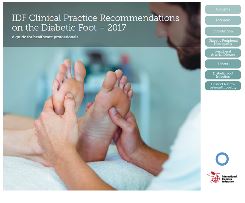 The diabetic foot is one of the most serious and costly complications of diabetes, resulting in an important economic, social, and public health burden, particularly in low-income communities. With the growing number of people living with diabetes worldwide, healthcare professionals are encouraged to pay attention to the major complications of diabetes in their daily practice. The new IDF Clinical Practice Recommendations on the Diabetic Foot are simplified, easy-to-digest guidelines to prioritize health care practitioner’s early intervention of the diabetic foot with a sense of urgency through education. The main goals are to promote early detection and intervention; provide the criteria for time-adequate referral to a second- or third-level centers and serve as a tool to educate people with diabetes about the importance of prevention of this complication. Download Practice Recommendations.
Current Interview: ADA 2017
Dr. Bruce Bode, MD, FACE, shares his knowledge on the artificial pancreas and diabetes pumps. Dr. Bode is a professor of medicine at Emory University School of Medicine in Atlanta, GA. He has a strong affinity for working with children and young adults with diabetes and is considered one of the leading experts in the world on insulin delivery and glucose sensing.
Test Your Knowledge
A 62-year-old man presents with type 2 diabetes, hypertension, and albuminuria. His seated BP is 162/104 mm Hg. What’s an ideal blood pressure target for this patient?
A. 140/90 mm Hg
B. 130/80 mm Hg
C. 120/70 mm Hg
D. 150/80 mm Hg
Follow the link to see the correct answer.
Did You Know: Depression Screening Can Improve Outcomes for Patients with Type 2
Yearly screening for depression in patients with type 2 diabetes can decrease negative health outcomes and can be a cost-effective way to reduce complications, according to current research. After a literature review of studies examining the relationship between depression and glycemic control, they respectively, aimed to develop a protocol for consistent depression screening for adult patients with type 2 diabetes; secondary outcomes included evaluation of clinic staff perceptions surrounding depression screening in diabetes. Of the 10 studies reviewed, 7 showed a “statistically significant” association between depression and inadequate glycemic control and 3 found that recognition of depressive symptoms, in conjunction with appropriate follow-up and treatment, led to improved A1c levels. The proposed protocol would collect baseline data, including age, sex, comorbidities, and history of depression. Patients would complete the Patient Health Questionnaire-2; patients scoring positive for depression would complete the Patient Health Questionnaire-9. After electronic documentation, clinicians should review HbA1c levels and offer either referral or treatment for depression. By following this protocol, patients with type 2 diabetes may experience fewer, and less expensive, complications, as well as lower A1c levels over time. “Patients with major depressive disorder have a mean life span of 25 to 30 years less than the average person,” the researchers noted. The purpose of this project was not only to identify and treat patients with diabetes, but also implement a sustainable process to screen these patients…for depression.–Presented at the American Association of Nurse Practitioners (AANP) 2017 National Conference, held June 20 to 25 in Philadelphia, Pennsylvania.
Study authors sought to characterize the tolerance test, and HbA1c—in a population of patients with coronary artery disease (CAD).
Apart from Sotagliflozin’s use in the treatment of people with type 2, SGLT-1 and SGLT-2 inhibitors effects on type 1 currently being explored.
Study aims to distinguish different antidiabetic drugs and their effect on osteoporosis in people with diabetes.
People with type 1 diabetes receiving once-daily injection of glucagon-blocking drug, REMD-477 can reduce their insulin use considerably and improve blood glucose levels without altering hypoglycemia.
Older adults taking five or more drugs are likely to exhibit negative side effects.
Quote of the Week!
“Without health life is not life; it is only a state of langour and suffering – an image of death.”
…Buddha
Diabetes in Control gratefully acknowledges the assistance of the following pharmacy doctoral candidates in the preparation of this week’s newsletter:
Nuha Awad, Doctor of Pharmacy Candidate, ACCP|FSHP
Your Friends in Diabetes Care
Steve and Dave
Diabetes In Control
810 Bear Tavern Road Suite 102
Ewing, NJ, 08628
USA
www.diabetesincontrol.com