 Diabetes In Control. A free weekly diabetes newsletter for Medical Professionals. News and information for Medical Professionals.
- A Step Closer To A Cure: Reprogramming Beta Cells
- Preventing Prediabetes from Becoming Diabetes by 80%
- Manage Your Blood Sugar, Control Your Heart
- Continuous Glucose Monitoring: An Adjunct or A Standalone Tool?
- Valsartan Delays the Incidence of Microalbuminuria in Prediabetes Patients
- Joint Health Is Critical to Staying Active
- by Featured Writer Sheri Colberg, Ph.D.
Letter from the Editor

For many of our patients, the desire to exercise is often overwhelmed by the pain associated with the activity. Other patients who are reluctant to exercise in the first place will use any pain as an excuse to stop. Interestingly, much of the pain they complain of could be eliminated by taking better care of their joints. Since joints in parts of the body like the knee and ankle get a lot of stress, they are often the ones that bother patients the most. Old age, overuse, and lack of stretching are just a few of the things that make the pain more intense. This month, Dr. Sheri Colberg takes a look at joint mobility and how controlling glucose, stretching, and specialized activity can decrease pain and keep your patients moving.
*****************************
We can make a difference!
*****************************
Dave Joffe
Editor-in-chief
This Week's Survey
In your practice, how do you test for prediabetes?
1) OGTT
2) A1c
3) Fasting blood sugar
4) Random blood sugar
Follow the link to see how your answer compares!
Newsflash: Concern About TRESIBA Pens
With the introduction of the TRESIBA (insulin degludec) U-200 pens comes a chance for dosing errors. See this week’s Did You Know.
New Product: Senior Help Alert Devices
 First Mobile Personal Help Alert Device That Directly Calls & Texts Family & Caregivers: Statistics show that while one in three seniors will experience a fall this year, many more will require non-emergency routine assistance. Independent seniors enjoy the feeling of safety and security a medical alarm button provides. Unfortunately, many are often hesitant to call the professional monitoring center unless it is a life or death emergency. RescueTouch innovative CareCallers are designed to directly call caregivers, family, neighbors, or friends instead. It sends an immediate text notification and then calls up to three user-programmable contacts when the SOS button is pressed. When the call is answered, the wearer can speak with the contact using the built-in two-way speakerphone. CareCaller™ includes a built-in real-time GPS locator.
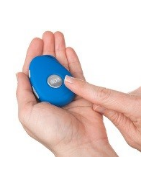
The instant the SOS button activates the CareCaller™, an urgent text message is sent to all pre-established contacts. The text message alerts the contact of the device activation, identifies the wearer by name, provides the exact date/time of the activation, transmits the precise GPS location, and even provides a link to a Google map. Next, the CareCaller™ will immediately begin dialing the three pre-programmed contact numbers in order. When a contact answers the call, they can speak with the wearer over the built-in two-way speakerphone. If a contact does not answer, the CareCaller™ dials the second number on file and then the third number for up to five minutes. More advanced than other older medical alarm devices, CareCaller™ enables the pre-designated contacts to call the wearer’s CareCaller™ any time to speak with them to ensure they are all right. Caregivers can also quickly and easily send a simple text message to the CareCaller™ and receive its current location – making it perfect for lost or disoriented wearers. RescueTouch
Newsflash: FDA Approves Qtern
Test Your Knowledge
A 34-year-old female presents to your office for a new patient visit. Her medical history is positive for gestational diabetes mellitus (GDM). The Diabetes Prevention Program Research Group found that implementing intensive lifestyle modifications and prescribing metformin resulted in an equivalent risk reduction of developing diabetes by:
a) 15%
b) 25%
c) 50%
d) 65%
Follow the link to see the correct answer!
Did You Know: Tresiba U-200 Won’t Allow Odd Number Dosing of Insulin Units
 With the introduction of the TRESIBA (insulin degludec) U-200 pens comes a chance for dosing errors. A pharmacist recently reported that a physician prescribed 25 units daily of Tresiba U-200. This product is only available in the Novo Nordisk Flex-Touch insulin pen. An odd numbered dose is not possible with U-200 because the pen only allows dosing increments in even numbers, starting at 2 units and going up to 160 units. In this case, an elderly patient tried to dial 25 units by estimating the proper position between 24 units (marked on the pen) and a notch or score that represents 26 units (Figure 1). Due to the design of the pen, the insulin will not be administered unless the pen is correctly set to a dose—24 or 26 units in this case. It’s important for healthcare professionals to be aware of the difference between U-100 pens and the U-200 Tresiba pen. Although the U-200 pen WILL allow doses from 2 to 160 units (in even numbers only, 2 units at a time), prescribers should consider providing a U-100 pen when smaller or odd numbered doses must be administered, reserving U-200 pens for patients requiring larger, even-numbered doses.
Image: Tresiba U-200 pen allows dosing increments of 2 units, so only even numbered doses can be delivered. (www.ismp.org Institute for Safe Medication Practices)
Type 1 beta cells succumb to autoimmunity, leaving significantly reduced beta-cell mass and lifelong dependence on insulin replacement therapy, while type 2 beta cells fail to secrete sufficient insulin to overcome prevailing insulin resistance.
In a new international clinical trial, it was shown that the drug liraglutide 3.0 mg may reduce diabetes risk by 80% in individuals with obesity and prediabetes.
Insulin resistance associated with high blood pressure and other risk factors.
Is the use of continuous glucose monitoring alone superior versus its use with the blood glucose monitoring?
Valsartan associated with reduction in new onset diabetes in patients with impaired glucose tolerance
Featured Writer Sheri Colberg, Ph.D.
Without properly functioning joints, our bodies would be unable to bend, flex, or even move. A joint is wherever two bones come together, held in place by tendons that cross the joint and attach muscles to a bone on the other side and ligaments that attach to bones on both sides of the joint to stabilize it.
Quote of the Week!
“Never give up, for that is just the place and time that the tide will turn.”
…Harriet Beecher Stowe
Your Friends in Diabetes Care
Steve and Dave
Diabetes In Control
810 Bear Tavern Road Suite 102
Ewing, NJ, 08628
USA
www.diabetesincontrol.com