 Diabetes In Control. A free weekly diabetes newsletter for Medical Professionals. News and information for Medical Professionals.
- Preventing CV Death in Patients With Diabetes
- New ADA 2017 Standards of Medical Care in Diabetes
- New ADA Standards Highlighted by Sections Part 1
- New ADA Standards Highlighted by Sections Part 2 (Sections 6-14)
- FDA: No Fingerstick Needed with Dexcom G5 CGM
- Guest Post by David Kliff, Diabetic Investor
- When It’s Hard to Treat Exercise-Related Hypoglycemia
- by Sheri Colberg, Ph.D., FACSM
Letter from the Editor

The ADA has announced their new Standards of Care for 2017 and they are taking a more global approach to A1C, CVD and hypoglycemia. When it comes to CVD, there is a bigger push to get patients to improve blood pressure levels. They recommend more widespread use of ARB’s and diuretics like HCTZ and Chlorthalidone. The SGLT-2 inhibitors also get a double plug because of their ability to lower glucose and improve cardiovascular outcomes. For A1C reduction, insulin is still the supreme drug choice and the ADA is acknowledging that even though the most efficient insulins are the best, the high cost of these insulins prevent many patients from using them, and as our good friend David Kliff from Diabetes Investor often says, “It doesn’t matter how good the drugs are if no one can afford to use them.”
To help with these high costs, Eli Lilly has stepped forward and begun working with Blink Health (https://www.
Dave Joffe
Editor-in-chief
Newsflash: FDA: No Finger Stick Needed with Dexcom G5 CGM
This Week's Survey
What percentage of your patients have a difficult time following their diabetes treatment regimen?
1) Greater than 75%
2) Greater than 50%
3) Less than 50%
4) Less than 25%
Follow the link to share your opinion!
New Product: “Smart Insulin Patch” May Replace Injections
Researchers have invented a “smart insulin patch” that detects increases in blood sugar levels and quickly secretes doses of insulin into the bloodstream whenever needed. If proven effective in humans, the smart insulin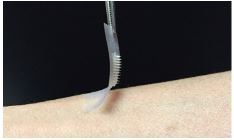 patch has the potential to replace bothersome insulin injections, according to researchers at the University of North Carolina. The smart insulin patch has more than 100 microneedles that detect increases in blood sugar and then secrete doses of insulin when needed. The new, painless patch is smaller than a postage stamp and is covered with an array of more than 100 microneedles, each of which are loaded with insulin and glucose-sensing enzymes that rapidly release the insulin when blood sugar levels get too high. Investigators found that the patch was able to lower blood glucose in mice with type 1 diabetes for up to 9 hours. The patch works fast, is easy to use and is made with nontoxic materials. Because this has only been tested in mice, it might be awhile before we see this being tested on humans, but it could come soon once the preliminary studies are done for safety in humans. In addition, the researchers found that they could “tune” the patch to alter blood glucose levels within a certain range by varying the dose of enzyme contained within each of the microneedles. They also found that the patch did not pose the hazards that poorly-timed insulin injections can have. This study is published in the Proceedings of the National Academy of Sciences.
Test Your Knowledge
What physiological feature puts East Asians at increased risk for type 2 diabetes?
1. Greater insulin resistance
2. Lower levels of endogenous incretins
3. Increased beta-cell dysfunction
4. Increased incidence of dyslipidemias
Did you get it right? Follow the link to see the correct answer!
Did You Know: Eli Lilly Offering Insulin Discounts
Eli Lilly announced a plan for people with diabetes to access price discounts on insulin via mobile and web platforms. The Endocrine Society praised the company’s action, which addresses the call for entities in the supply chain to keep insulin accessible to those who need it, according to an Endocrine Society press release. Lilly partnered with the pharmacy benefit management organization Express Scripts to use its platform Blink Health to offer the discounts. Mike Mason, vice president of Lilly Diabetes, said in a company press release that, “We understand the burden people face when paying full price for insulin….This platform will effectively allow Lilly to lower our insulin retail prices for users of this platform while not affecting the reimbursement system for other people living with diabetes.” Blink Health will allow patients who pay full price for Lilly insulins, such as those without insurance or those in the deductible phase of a high-deductible insurance plan, to save up to 40%. The plan went into effect January 1, 2017. Also, Novo Nordisk said it would limit price increases for insulin and was open to collaborations to address the rising prices.
What do we need to tell our patients about preventing the risk for death?
Psychological health, access to care, expanded and personalized treatment options and the tracking of hypoglycemia emphasized.
New recommendation based on results from two large clinical trials for patients with diabetes and CVD.
Clinically significant hypoglycemia redefined, bariatric surgery renamed.
Guest Post by David Kliff, Diabetic Investor
Dexcom (NASDAQ: DXCM) received FDA approval for non-adjunctive claim.
by Sheri Colberg, Ph.D., FACSM
My last article focused on why glucose was the best short-term treatment for hypoglycemia, but this time I want to switch gears and talk about why treating lows is not as straight-forward as you would think. It mainly stems from the fact that sometimes hypoglycemia can be very difficult to treat effectively and even hard to prevent in many cases, particularly related to physical activity.
Quote of the Week!
“We can change our lives. We can do, have, and be exactly what we wish.”
…Tony Robbins
Your Friends in Diabetes Care
Steve and Dave
Diabetes In Control
810 Bear Tavern Road Suite 102
Ewing, NJ, 08628
USA
www.diabetesincontrol.com