 Diabetes In Control. A free weekly diabetes newsletter for Medical Professionals. News and information for Medical Professionals.
- FDA Approves First Artificial Pancreas
- Comparing Canagliflozin and Glimepiride in Attaining Quality Measures
- EASD: Another New Diabetes Drug Reduces CV Risk
- EASD: Statins Can Improve Infections in People with Diabetes
- 40% of Diabetes Patients Not Getting Treatment To Prevent Heart Attacks and Strokes
- Reclassifying Diabetes: is it Time for an Expanded Definition?
- Guest Editorial by Dr. Eden Miller
Letter from the Editor

I am sure you have heard of the driverless Uber cars that will shortly populate the highways delivering food, passengers, and most likely, Amazon packages. This morning I heard that long haul trucks will run on the same autopilot system, except there will be a driver in the cab for when the system can’t handle the narrow streets or road hazards that may be out there.
Just as we are making great strides in driverless cars, we have been making strides in programs and devices to manage diabetes; sometimes you need a lot of help, and sometimes you almost don’t. We have a new product from Johnson and Johnson, the “OneTouch Via,” a new delivery device that has almost no technology, but allows a patient to not use syringes or pens. And we have a great feature on the new Medtronic 670G hybrid that can manage your patient’s glucose automatically most of the time. Be sure to read these two articles and see if you would trust a glucose management device as well as a driverless Uber car.
*****************************
We can make a difference!
*****************************
Dave Joffe, Editor-in-chief
This Week's Survey
The FDA-approved artificial pancreas will probably be available the first quarter of 2017 from Medtronic. Will you recommend it now or will you wait for at least 1-2 years? Follow the link to share your response!
Newsflash: Mylan launches Generic Version of Fortamet
Mylan announced the U.S. launch of Metformin Hydrochloride Extended-release Tablets USP, 500 mg and 1000 mg, a generic version of Watson’s Fortamet®, on September 30, 2016. Mylan received final approval from the U.S. Food and Drug Administration (FDA) for its Abbreviated New Drug Application (ANDA) for this product, which is indicated as an adjunct to diet and exercise to improve glycemic control in adults with type 2 diabetes mellitus.
New Product: J&J’s OneTouch Via Mealtime Insulin Delivery Device
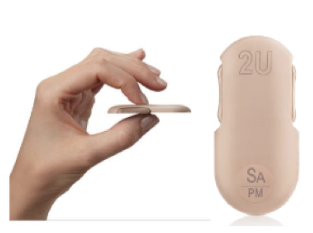 This is one of J&J’s key pipeline projects in diabetes. The OneTouch Via, formally called the Calibra Finesse mealtime insulin delivery device, was approved by the FDA.
J&J’s “OneTouch Via” has an expected launch within the next 12 months – it will be commercially available in select U.S. markets by late 2016, with greater availability to come in 2017. The product has been slightly delayed due to the need to be resubmitted to the FDA due to some changes, as the FDA already approved the original product. This would be a first-of-its-kind product for a new approach for mealtime insulin delivery.
The Via is a very slim, plastic device worn on the skin for up to three days. It can hold up to 200 units of fast-acting insulin (Humalog, NovoLog), and allows the wearer to take boluses in two-unit increments by pressing two buttons simultaneously, which you can do through your clothing. The OneTouch Via is completely mechanical — no handheld controller, displays, batteries, or memory – so because of its simplicity we are hoping the cost will be relatively low.
The Via will be geared to both people with type 1 and type 2 diabetes – though originally, this was viewed as a type 2 product. But it will work to replace syringes and pens for food boluses. J&J is also working on a unit with connectivity and a larger reservoir. This product could help the 57% of type 2 patients who skip insulin on a regular basis due to the stigma.
Test Your Knowledge
Please select the drug class that best fits the description.
This oral drug class slows the intestinal digestion and absorption of carbohydrates:
1. Sulfonylureas
2. DPP-4 Inhibitors
3. Alpha-glucosidase inhibitors
4. Bile Acid sequestrates
Did you get it right? Follow the link to find out!
Did You Know: Risk Test Assesses Prediabetes Risk
3 out of 5 people 40 years or older and 8 out of 10 people 60 or older are at high risk for prediabetes: A research letter estimates population risk for prediabetes according to a risk test. The results come from applying a widely endorsed risk assessment tool for prediabetes to the U.S. population, which was published online by JAMA Internal Medicine.
The U.S. Centers for Disease Control and Prevention, the American Diabetes Association and the American Medical Association have promoted a web-based risk test to evaluate people at high risk for prediabetes for whom they recommend practice-based laboratory testing. Saeid Shahraz, M.D., Ph.D., of Tufts Medical Center, Boston, and coauthors used the risk test to estimate the proportion of the adult, nondiabetic U.S. population that would be classified as being at high risk for prediabetes. The authors used data from the 2013-2014 National Health and Nutrition Examination Survey population and calculated risk scores for prediabetes based on seven questions. The questions included age, sex, family history of diabetes, history of gestational diabetes and high blood pressure, physical activity and weight. Among 10,175 survey participants, 96.5 percent had complete information for all the questions. For people over 40, the estimated number to be at high risk for prediabetes was 73.3 million or 58.7 percent, according to the results. Among those participants 60 or older, the population proportion at high risk for prediabetes was 80.8 percent. A medical visit and blood glucose test are required for confirmation.
The research letter concludes that medicalization of prediabetes may have the unintended consequence of reducing healthcare access to patients with type 2 diabetes and other chronic conditions. A valid method to examine for prediabetes should avoid unnecessary medicalization by labeling a disease predecessor as a medical condition and seek to concentrate on people at highest risk to allow for efficient distribution of limited healthcare resources,” — JAMA Intern Med. Published online October 3, 2016. doi:10.1001/jamainternmed.2016.5919.
Device automatically monitors blood glucose levels and delivers insulin when appropriate for people age 14 years and older who have type 1 diabetes.
How do these drugs compare in achieving updated diabetes-related quality measures?
Semaglutide reduced major cardiovascular events by 26% in adults with type 2 at high cardiovascular risk.
Patients treated for cholesterol lowering appear to have extra benefits.
Research reveals important gaps in care.
Guest Editorial: Dr. Eden Miller
For those healthcare providers who treat diabetes with any kind of regularity, it has become increasingly obvious that several of our patients fall outside the current diabetes classification system. With individualization of patient care being the new focus, it can be challenging to accomplish this, when certain diabetic individuals don’t “conform” to the current definitions.
Quote of the Week!
“It is only in sorrow bad weather masters us; in joy we face the storm and defy it.”
…Amelia Barr
Diabetes in Control gratefully acknowledges the assistance of the following pharmacy doctoral candidates in the preparation of this week’s newsletter:
Rebecca Tourtellotte, University of Rhode Island
Your Friends in Diabetes Care
Steve and Dave
Diabetes In Control
810 Bear Tavern Road Suite 102
Ewing, NJ, 08628
USA
www.diabetesincontrol.com