 Diabetes In Control. A free weekly diabetes newsletter for Medical Professionals. News and information for Medical Professionals.
- Pioglitazone First Medication to Prevent Diabetes Progression Including Cardiovascular Events
- Expanding the Role of Canagliflozin in the Elderly
- HbA1c and OGTT: Understanding the Differences
- How Useful Is The Glycemic Index?
- Glucagon Receptor Antagonist Completes Clinical Trials
- Special Feature: E-Bikes and Cycling for Health
- When a Bike Is Not a Bike…But Rather a Health Device
by Featured Writer, Sheri R. Colberg, Ph.D., FACSM - Bike to Prevent Type 2 Diabetes
by our Publisher, Steve Freed
- When a Bike Is Not a Bike…But Rather a Health Device
Letter from the Editor

Most of you know that I love to cycle, and many times we bring you information on Team NovoNordisk and how they are doing in the professional cycling world. It is sad to say most of our patients would be hard pressed to get on a bike, much less ride it for 10 miles. However, new studies are showing the value of bicycle riding in helping patients with diabetes, hypertension and metabolic syndrome. Can we ask our older obese patients to get on a bike? Are we willing to take the risk of one of our patients falling. or even worse, the bike breaking because of our patient’s weight?
To research this, Steve and I spent four days at Interbike in Las Vegas, looking at the newest and greatest ideas in cycling. Although there were some beautiful $13,000 hand-made wood bikes and a new Colnago C60 that was worth $16,500, most of the attention was on e-Bikes. These pedal assist bikes are taking every style of cycling by storm, and Steve and I got to try out 2 dozen of the best e-Bikes. There were electric road bikes, mountain bikes, cross bikes, townies and tandems from a variety of manufacturers. Steve got to select one of the bikes and use it for a long-term test ride, and he put together his special feature “Bike to Prevent Type 2 Diabetes.”
This review goes along great with a feature we have from Sheri Colberg on looking at a bike as a heath device.
 And finally, we want to take a moment to acknowledge DIC Advisory Board member R. Keith Campbell, who was recently awarded the Bill Mueller Outstanding Mentor Award for his years of service and leadership, especially in the fields of pharmacy and diabetes. We congratulate Keith on this well-deserved honor, and thank him for his many contributions to DIC.
*****************************
We can make a difference!
*****************************
Dave Joffe, Editor-in-chief
This Week's Survey
Will you use the combination of insulin and a GLP-1 (when it becomes available) sooner than you would recommend insulin alone for people with type 2 diabetes? Follow the link to share your opinion!
Newsflash: FDA Approves Abbott FreeStyle Libre Pro System
Abbott announced that the U.S. Food and Drug Administration (FDA) has approved the company’s FreeStyle Libre Pro system, a revolutionary continuous glucose monitoring (CGM) system for healthcare professionals to use with their patients with diabetes. FreeStyle Libre Pro system is designed to empower healthcare professionals to provide better diabetes management for diabetes patients. The system provides healthcare professionals with a visual snapshot of glucose data, known as the Ambulatory Glucose Profile (AGP), giving a more simplified and clear overview of not only glucose levels, but also patterns and trends within those levels. and for a significantly lower cost than other professional CGM products available. Learn more.
New Product: E-Power Life Bike
 Through a partnership with Dr. Ludwig V. Geiger the LIFE concept, was developed aimed at encouraging people who would not normally ride to improve their lifestyle with exercise.This e-Life Bike was developed for those with diabetes, cardiovascular disease, obesity and even osteoarthritis. The parts are selected to work with a rider of up to 400 pounds and designed to be easy to use. It has ergonomic and extremely durable frame thanks to fusion tube and handlebar stabilizers plus extra reinforced spokes. Has an ergonomic saddle plus much more. But, its real benefit is is electric pedal assisted drive, so even if you haven’t ridden a bicycle for 30 or more years, now you can. It will make you feel 30 years younger. — See Item 6 for Sheri Colberg’s test ride and review. For more information email publisher@diabetesincontrol.com.
Newsflash: World's First Hybrid Closed Loop Insulin Delivery System Approved
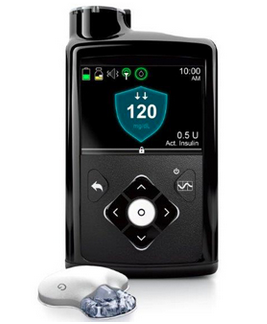 Medtronic, the global leader in medical technology, announced Wednesday it has received U.S. Food and Drug Administration (FDA) approval of its MiniMed® 670G system – the first Hybrid Closed Loop insulin delivery system approved anywhere in the world. Featuring the company’s most advanced algorithm – SmartGuard(TM) HCL – the system is the latest innovation in Medtronic’s phased approach toward developing a fully automated, closed loop system. Medtronic is committed to simplifying and improving diabetes management through the advancement of smart algorithms that achieve greater glucose control with reduced patient input. Through SmartGuard HCL, the system builds on Medtronic’s industry leading algorithms to offer therapy customization so patients and providers can choose from increasing levels of automation that best fit their diabetes management needs.
Test Your Knowledge
The development of type 2 diabetes is multifactorial. All of the following are thought to play a role in the development EXCEPT:
1. Genetics
2. Environmental factors
3. Elevated circulating free fatty acid levels
4. Pancreatic α-cell defects
5. Increased skeletal GLUT4 glucose transporters translocation capacity
Did you get it right? Follow the link to find out!
Did You Know: Can Cannabis Play A Role in Diabetes Treatment?
An ingredient in cannabis is Tetrahydrocannabivarin (THCV, THV), a homologue of tetrahydrocannabinol (THC) This terpeno-phenolic compound is found naturally in Cannabis, sometimes in significant amounts. The psychoactive effects of THCV in Cannabis preparations are not well characterized. In a current study, patients with non-insulin-treated type 2 diabetes who received tetrahydrocannabivarin had a significant reduction in fasting plasma glucose and improved adiponectin, apolipoprotein A and pancreatic beta cell function, compared with those on placebo.
This study set out to examine the effects of these compounds in patients with type 2 diabetes. In this randomized, double-blind, placebo-controlled study, 62 subjects with noninsulin-treated type 2 diabetes were randomized to five treatment arms. The primary end point was a change in HDL-cholesterol concentrations from baseline.
Secondary/tertiary end points included changes in glycemic control, lipid profile, insulin sensitivity, body weight, liver triglyceride content, adipose tissue distribution, appetite, markers of inflammation, markers of vascular function, gut hormones, circulating endocannabinoids, and adipokine concentrations. Safety and tolerability end points were also evaluated. The results showed that compared with placebo, THCV significantly decreased fasting plasma glucose and improved pancreatic β-cell function, adiponectin and apolipoprotein A, although plasma HDL was unaffected. Compared with baseline (but not placebo). In conclusion, the results showed that THCV could represent a new therapeutic agent in glycemic control in subjects with type 2 diabetes.
Khalid A. Jadoon, Stuart H. Ratcliffe, David A. Barrett, E. Louise Thomas, Colin Stott, Jimmy D. Bell, Saoirse E. O’Sullivan, Garry D. Tan: Diabetes Care 2016 Aug; dc160650. https://dx.doi.org/10.2337/dc16-0650
Study could not evaluate drug’s long-term effects on diabetes prevention, length of effects
What benefits can medication provide in elderly patients with uncontrolled type 2?
Is A1c better than an Oral Glucose Tolerance Test in diabetes management?
New research shows varied individual responses to GI values may be confusing for patients
Early studies of novel agent LGD-6972 show potential as an adjunct therapy to diet and exercise for patients with type 2 diabetes.
Why are people inactive, especially when they have diabetes and know how much physical activity could benefit them? If they’re older, overweight or obese, arthritic, or dealing with other physical or joint limitations, they may not feel capable of walking for exercise, and they may not have easy access to other types of activities. This may be particularly true of adults with nerve damage in their feet or arthritic knees for whom walking for exercise is just not feasible. Enter the Corratec Life Bike, particularly designed with adults with diabetes in mind.
What if your patient’s mode of transportation could help to reduce the risk of developing type 2 diabetes and cardiovascular disease? What if an enjoyable daily health habit could help them avoid these chronic lifestyle-related diseases?
Quote of the Week!
“To enjoy the glow of good health, you must exercise.”
…Gene Tunney
Diabetes in Control gratefully acknowledges the assistance of the following pharmacy doctoral candidates in the preparation of this week’s newsletter:
Christian Gill, University of Rhode Island
Jillian Popek, University of Rhode Island
Your Friends in Diabetes Care
Steve and Dave
Diabetes In Control
810 Bear Tavern Road Suite 102
Ewing, NJ, 08628
USA
www.diabetesincontrol.com