 Diabetes In Control. A free weekly diabetes newsletter for Medical Professionals. News and information for Medical Professionals.
- Cardiovascular Mortality of Diabetes Medications
- Metformin in Type 1 Patients Slows Development of Heart Disease
- Glycemic Benefits of Lixisenatide
- Empagliflozin and Long-Term Renal Effects
- Evaluating the Role of Liraglutide in Type I Diabetes
- Exclusive Interview: Dr. Robert Geho
- Transcript: The Role of the Liver in Type 1 Diabetes
- Transcript: Adding Diasome’s HDV to Insulin
- Full Video: Interview with Dr. Geho|
- In case you missed it: the latest SGLT-2 News: SGLT-2s and Evidence-Based Medicine | Type I Diabetes Mellitus: A Triple Therapy Approach
Letter from the Editor

There have been a lot of ideas over the years about making a prodrug to deliver insulin. Most of the attention has been focused on making an oral insulin. Each year we move closer, and just a few weeks ago we had information on our website about the newest of these products. Typically we think of insulin as a hormone that simply moves the glucose from the bloodstream into the cells. However, insulin has a direct effect on the cells in the liver, and this week our publisher shares an exclusive interview he had with Robert Geho, CEO of Diasome, as he describes what hepatocytes do and how mixing them with insulin can improve diabetes care.
*****************************
We can make a difference!
*****************************
Dave Joffe, Editor-in-chief
Newsflash: Germany Ahead of U.S. in Reimbursement for CGMS
Germany announced that it would reimburse for CGM systems for insulin-using patients with type 1 and type 2 diabetes who require intensive insulin therapy, which can signal potentially dangerous high or low blood glucose trends. This will include the Dexcom CGM system.
This Week's Survey
Do you agree that CGMS will eventually replace glucose monitors? Follow the link to share your opinion!
New Product
 Senseonics recently announced CE Mark approval in Europe for its Eversense 90-day implantable CGM sensor, body-worn transmitter (worn over the sensor with adhesive tape), and mobile app for viewing real-time glucose data. Eversense was first to launch in Sweden last June. Eversense is being positioned as the “world’s first long-term wear sensor.” Eversense uses a 90-day implanted sensor (a bit larger than a pill) that is placed in the upper arm in a 5-10 minute in-office procedure. A rechargeable transmitter device is worn on top of the skin, directly over the sensor, which powers the implant and sends the current glucose value and trend arrow to a smartphone. The transmitter is removable (users can take it off/put it back on without wasting a sensor), though it must be on in order to get glucose readings. Eversense requires two fingerstick calibrations per day, and its average error in trials relative to a lab measurement is ~11% (slightly worse than Dexcom’s G5 at ~9%, but slightly better than Medtronic’s Enlite at ~14%; Abbott’s FreeStyle Libre is also ~11%, though it does not require any fingerstick calibrations).
Both the smartphone and transmitter will alert the user of a high or low glucose. When the phone is out of 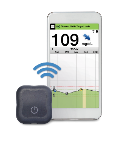 range, the transmitter will provide an on-body vibration alert to indicate a high or low – a nice feature that distinguishes Eversense from other systems. Eversense is approved as an adjunct device to complement standard home glucose meters, meaning it is not approved for insulin dosing (like G5 or FreeStyle Libre in Europe). The company plans to submit the device for FDA approval by the end of 2016, meaning it could be approved sometime in late 2017 or early 2018. In addition to seeing a current glucose value every 5 minutes, the app is also intended to display where you are headed and how fast, so you can take steps to stay in control.
Test Your Knowledge

Did You Know: Intarcia Poised for ITCA 650 NDA Filing for Type 2 Diabetes Within 30-60 Days
ITCA 650 (continuous subcutaneous delivery of exenatide) is being developed as a once- or twice-yearly therapy for the chronic treatment of type 2 diabetes. The investigational therapy employs Intarcia’s innovative technology platform, the Medici Drug Delivery System™. In its Phase 3 clinical trials for type 2 diabetes, ITCA 650 was evaluated while delivering a continuous and consistent drug therapy in a three-month initiation dose, followed by consecutive six-month doses. Exenatide, the active agent in ITCA 650, is a glucagon-like peptide-1 (GLP-1) receptor agonist that is currently marketed globally as twice-daily and once-weekly self-injection therapies for type 2 diabetes. If approved, ITCA 650 would be the first and only injection-free GLP-1 therapy. Intarcia Therapeutics successfully completed its FREEDOM global Phase 3 clinical trial program for ITCA 650, with each of the four studies meeting their clinical endpoints.
Intarcia’s novel medical delivery technology platform, the Medici Drug Delivery System, is a proprietary subcutaneous delivery system comprised of three unique technologies:
- A stabilization technology that allows for proteins, peptides, antibody fragments, and other highly potent small molecules to be stabilized at or above human body temperatures for up to three years or more
- A matchstick-sized osmotic mini-pump that is placed just under the dermal layer of skin to deliver a continuous and consistent flow of medication
- A placement technology including proprietary tools designed for a simple, quick and highly reliable user experience
Once trained, physicians, physician’s assistants, or nurse practitioners can quickly and simply place the small device in a comfortable in-office procedure. Once in place under the skin, water from the extracellular fluid enters the pump device at one end – by diffusing through a semi-permeable membrane directly into a salt osmotic engine – that expands to drive a piston at a controlled rate. This allows the drug within the pump to be released in a steady, consistent fashion at the distal end of the device. Each osmotic mini-pump is designed to hold an appropriate volume of either mono or combination therapy, to treat a patient for up to a full year and beyond. — Intarcia Press Release
What should be the proper treatment selection for patients with type 2 diabetes?
Scientists believe drug commonly prescribed for T2 could be routinely taken by T1 patients.
What benefits can lixisenatide provide when added to basal insulin regimen?
Empagliflozin might not only decrease the risk of cardiovascular events in patients with type 2, but also renal events.
Could GLP-1 inhibitors be a useful adjunct therapy in type I diabetes?
Exclusive Interview: Dr. Robert Geho
In part one of this exclusive interview, Dr. Robert Geho discusses the essential role of the liver in metabolizing insulin, and asks why we hear about the artificial pancreas all the time, but never hear anyone talk about an artificial liver?
In Part 2 of this exclusive interview, Dr. Robert Geho discusses the Phase 2b study which focuses on adding Diasome’s HDV to a leading pre-meal fast acting analogue.
In this Exclusive Interview, Dr. Robert Geho joins Diabetes in Control publisher Steve Freed at the 2016 Diabetes Symposium in Boston to discuss the testing, affects, and potential marketing of a new insulin delivery system currently undergoing trials. Robert Geho, MD, is a co-founder and CEO of Diasome Pharmaceuticals, Inc. In his role at Diasome, …
Quote of the Week!
“Things do not happen. Things are made to happen.”
…John F. Kennedy
Diabetes in Control gratefully acknowledges the assistance of the following pharmacy doctoral candidates in the preparation of this week’s newsletter:
Pablo A. Marrero-Núñez, USF College of Pharmacy
Christian Gill, University of Rhode Island
Meghan Kelly, University of Rhode Island
Your Friends in Diabetes Care
Steve and Dave
Diabetes In Control
810 Bear Tavern Road Suite 102
Ewing, NJ, 08628
USA
www.diabetesincontrol.com