Jun 12, 2018
Letter From The Editor
1,773 views
This week, our Clinical Text discusses both loss of beta cell function and beta cell mass, and how granulation can mask loss of mass. The interesting thing about this week’s installment is the overwhelming evidence that treating to a goal A1c is not the most important thing for a type …
Read More »
Jun 12, 2018
Devices, Disasters Averted
3,695 views
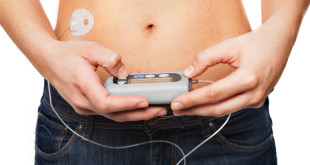
(This is a follow-up to the patient who was under the impression he would always need an insulin pump.) It was a "rocky" start at first. The patient had some early morning highs and some unexpected lows, but likes being off the pump. He wears his Dexcom, which he plans to continue with. This has been extremely helpful with alarms during the adjustments to his long-acting and rapid-acting insulins. The endocrinologist knew the patient was extremely sensitive to insulin, so his rapid-acting insulin has gone from using 1-unit increments to 0.5-unit increments instead and is doing well. At this time, the patient wants to stay off the pump, continue with MDI and the sensor. We're still making minor changes, but getting close to goal.
Read More »
Jun 12, 2018
AACE 2018, Exclusive Interviews, Videos
4,838 views
Yehuda Handelsman, MD, FACP, FNLA, MACE is an endocrinologist in private practice and Medical Director & Principal Investigator of the Metabolic Institute of America. He is a nationally and internationally recognized authority on Diabetes, Lipids, Obesity, HTN and the prevention of cardiovascular disease.
Read More »
Jun 12, 2018
Clinical Presentations
2,214 views
In this week's Homerun Slides, the natural history and progressive behavior of type 2 diabetes.
Read More »
Jun 12, 2018
Clinical Gems
3,039 views
Loss of beta-cell functional identity: The dominance of beta-cell functional impairment in T2DM implies that beta-cells have lost, at least in part, their normal insulin secretory phenotype. The associated molecular features have been discussed in a number of insightful reviews and research articles, and the role of genetic, epigenetic, transcriptomic and proteomic changes has been described extensively. At the cellular level, beta-cell insulin degranulation and the recently hypothesized beta-cell dedifferentiation phenomenon could play key roles. Insulin granules can be easily identified by electron microscopy on the basis of their typical morphology, characterized by a dense core and a more or less clearly visible halo. In addition, secretory granules can be subdivided into mature and immature, based on distinct ultrastructural, biochemical, and functional, with a relative ratio of 6 to 10 in normal human beta-cells.
Read More »
Jun 12, 2018
AACE 2018, Exclusive Interviews, Videos
2,565 views
In this Exclusive Interview, Dr. Yehuda Handelsman talks with Diabetes in Control Publisher Steve Freed during the AACE 2018 convention in Boston, MA about his presentation on the contemporary approach to the management of diabetes as a cardiovascular disease.
Read More »
Jun 12, 2018
AACE 2018, Exclusive Interviews
2,575 views
In this exclusive interview transcript, Dr. Handelsman discusses the relationship between diabetes and cardiovascular disease, and the impact new diabetes drugs are having on management of both conditions.
Read More »
Jun 12, 2018
AACE 2018, Exclusive Interviews, Videos
2,700 views
In part 1 of this Exclusive Interview, Dr. Yehuda Handelsman talks with Diabetes in Control Publisher Steve Freed during the AACE 2018 convention in Boston, MA about his work as an endocrinologist, and about why diabetes is a cardiovascular disease.
Read More »
Jun 12, 2018
AACE 2018, Exclusive Interviews, Videos
2,792 views
In part 2 of this Exclusive Interview, Dr. Yehuda Handelsman talks with Diabetes in Control Publisher Steve Freed during the AACE 2018 convention in Boston, MA about changing diabetes guidelines and what we've learned through studies of new diabetes drugs.
Read More »
Jun 12, 2018
AACE 2018, Exclusive Interviews, Videos
2,680 views
In part 3 of this Exclusive Interview, Dr. Yehuda Handelsman talks with Diabetes in Control Publisher Steve Freed during the AACE 2018 convention in Boston, MA about why the ACP changed A1C guidelines to 7% in their 2018 recommendations, and why he believes the new guideline is influenced by outdated research.
Read More »
 Diabetes In Control. A free weekly diabetes newsletter for Medical Professionals. News and information for Medical Professionals.