Mar 10, 2018
Polls
2,544 views
The American College of Physicians (ACP) said doctors can tell patients to aim for a glycosylated hemoglobin, or HbA1C, level between 7 percent and 8 percent, rather than the traditional 6.5 percent to 7 percent. Plus, clinicians should consider deintensifying pharmacologic therapy in patients with type 2 diabetes who achieve HbA1c levels less than 6.5%. (See article 2)
Do you agree A1c should be between 7% and 8%?
Follow the link to see what your colleagues think.
Read More »
Mar 10, 2018
Clinician Mobile Apps
8,821 views
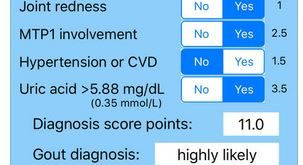
Gout is a tricky diagnosis to make. Rarely is it made via the gold standard technique of synovial aspiration and polarized light microscopy. The vast majority of diagnoses are clinical. A primary care and rheumatologist team of Dutch researchers led by Hein Janssens derived and published a clinical decision rule in 2010. This app brings that decision rule to primary care physicians, rheumatologists, and acute care (ER/urgent-care) clinicians everywhere.
Read More »
Mar 10, 2018
ADA 2017, Exclusive Interviews, Videos
8,222 views
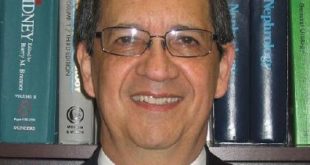
Dr. Jaime Uribarri is a physician and clinical investigator. He was born in Chile and received his medical degree from the University of Chile School of Medicine. He did all his postgraduate training in the United States. He has been in The Icahn School of Medicine at Mount Sinai, NYC, since 1990, where he is currently Professor of Medicine and Director of the Renal Clinic and the Home Dialysis Program at the Mount Sinai Hospital.
Read More »
Mar 10, 2018
ADA 2017, Exclusive Interviews
2,818 views
In this exclusive interview transcript, Dr. Jamie Uribarri discusses his research into Advanced Glycation Endproducts (AGEs) in food, the role they play in overall health, and how to achieve lower AGE diets through food choices and cooking techniques.
Read More »
Mar 10, 2018
ADA 2017, Exclusive Interviews, Videos
2,437 views
In this Exclusive Interview, Dr. Jamie Uribarri talks with Diabetes in Control Publisher Steve Freed during the ADA 2017 Scientific Sessions in San Diego, CA about his research into AGEs (Advanced Glycation Endproducts) in food, how AGEs affect health and contribute to diseases like diabetes, and how people can lower AGEs in their diets through food choices and cooking techniques.
Read More »
Mar 9, 2018
ADA 2017, Exclusive Interviews, Videos
4,071 views
In part 1 of this Exclusive Interview, Jamie Uribarri talks with Diabetes in Control Publisher Steve Freed during the ADA 2017 Scientific Sessions in San Diego, CA about the compounds called Advanced Glycation Endproducts (AGE) in food, and the benefits of a low AGE diet.
Read More »
Mar 9, 2018
ADA 2017, Exclusive Interviews, Videos
2,627 views
In part 2 of this Exclusive Interview, Jamie Uribarri talks with Diabetes in Control Publisher Steve Freed during the ADA 2017 Scientific Sessions in San Diego, CA about low AGE versus high AGE diets, and why cooking methods are key to avoiding foods with a high AGE.
Read More »
Mar 9, 2018
ADA 2017, Exclusive Interviews, Videos
2,190 views
In part 3 of this Exclusive Interview, Jamie Uribarri talks with Diabetes in Control Publisher Steve Freed during the ADA 2017 Scientific Sessions in San Diego, CA about high AGE foods and how dietitians can help teach patients cooking strategies to minimize AGE.
Read More »
Mar 9, 2018
ADA 2017, Exclusive Interviews, Videos
2,309 views
In part 4 of this Exclusive Interview, Jamie Uribarri talks with Diabetes in Control Publisher Steve Freed during the ADA 2017 Scientific Sessions in San Diego, CA about how some ethnic cooking methods may be factors in high AGE diets.
Read More »
Mar 9, 2018
ADA 2017, Exclusive Interviews, Videos
2,265 views
In part 5 of this Exclusive Interview, Jamie Uribarri talks with Diabetes in Control Publisher Steve Freed during the ADA 2017 Scientific Sessions in San Diego, CA about high AGE diets and kidney disease, and the limitations of clinical research.
Read More »
 Diabetes In Control. A free weekly diabetes newsletter for Medical Professionals. News and information for Medical Professionals.