 Diabetes In Control. A free weekly diabetes newsletter for Medical Professionals. News and information for Medical Professionals.
In this week's Homerun Slides, the vicious circle of hyperinsulinemia in patients with type 2 diabetes.
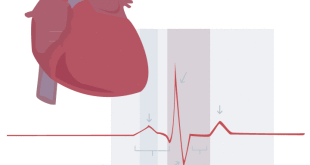
Read More »Diabetes for Cardiologists Part 2
In this week's Homerun Slides, the vicious circle of hyperinsulinemia in patients with type 2 diabetes.
Read More »
Female, 41 years of age, A1C 7%, Indian, family history of type 2 diabetes, at least one was insulin-requiring. For unknown reasons, perhaps the fact the patient was a personal trainer and “should have known what to do,” her hcp didn’t put much attention on her A1C, nor was she asked to return for follow up. For various reasons, one of which was not having insurance, she did not return to a hcp for 3 years.
Read More »
The other specific types of diabetes are less common and can be broadly classed as genetic, exocrine pancreatic, endocrine, and drug-induced causes. A more comprehensive breakdown is provided in Table 1.2 and the more common types are discussed briefly later.
Read More »
Diabetes in Control Publisher Steve Freed and Dr. Richard Bergman discuss his ADA presentations — the relationship between diabetes and altitude, and the role of kidneys in diabetes research. Steve also asks why the degredation of insulin in the liver is important in the pathogenesis of diabetes. Dr. Bergman is the founder and director of Diabetes and Obesity Research Institute, Biomedical Sciences at Cedars-Sinai in Los Angeles. He introduced the use of engineering principles to understand the pathogenesis of diabetes.
Read More »