 Diabetes In Control. A free weekly diabetes newsletter for Medical Professionals. News and information for Medical Professionals.
Typically when we diagnose a type 2 patient we start on the normal pathway of metformin and “diet and exercise” modifications. For many of our patients this regimen makes a significant improvement in their glucose levels and A1c values…. But for those patients who don’t improve, we are then forced …
Read More »Daily Archives: Oct 13, 2014
Editor’s Note, Insulin Special Edition, October 2014
We have added five totally new classes of non-insulin medications for the treatment of diabetes and so sometimes the reasons to even try insulin make no sense to many of us. However, when we identify patients that have severe cases of glucotoxicity and/or lipotoxicity we often find that they will …
Read More »Handbook of Diabetes, 4th Ed., Excerpt #13: Control and Complications

Rudy Bilous, MD, FRCP Richard Donnelly, MD, PHD, FRCP, FRACP Much of the impact of chronic diabetes results from the development of tissue complications, mainly microvascular (retinopathy, nephropathy and neuropathy) and macrovascular disease (atherosclerosis). Microangiopathy is characterized by progressive occlusion of the capillary lumen with subsequent impaired tissue perfusion, increased vascular …
Read More »Diabetes Mellitus 101 for Cardiologists, Part 1
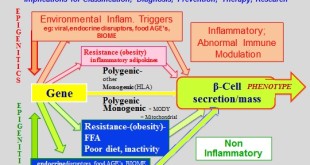
In this week’s slide series, courtesy Dr. Stanley Schwartz, we review some of the basics of diabetes mellitus but this time from a cardiologist’s perspective, focusing in on the connections between diabetes and heart disease…. To download the complete set of these slides in PowerPoint (.ppt) format, just use this …
Read More »