 Diabetes In Control. A free weekly diabetes newsletter for Medical Professionals. News and information for Medical Professionals.
When a patient goes into the hospital they often are put on medications that affect their glucose. These meds can then follow them home where there are no clinical pharmacists or registered nurses to make sure everything runs right. This week our Case Study focuses on the use of steroids …
Read More »Yearly Archives: 2011
Editor’s Note: Insulin Vial Discard Dates, Polypharmacy Problems and GLP-1 Slides
Many times I get a call from a colleague asking about discarding insulin. Typically the one they ask about is Glargine. As most of you know the vial advises patients to discard the vial and remaining insulin 28 days after opening; however, due to the cost, many of our patients …
Read More »Managing Clinical Problems in Diabetes, Case Study #22: Combining Steroids and Insulin
Edited by Trisha Dunning AM, RN, MEd, PhD, CDE, FRCNA and Glenn Ward MBBS, BSc, DPhil (Oxon), FRACP, FRCPath Mr. WWB was referred to the diabetes educator by a nurse working on a medical ward. “We have a man here on the medical ward with COAD (chronic obstructive airways disease). …
Read More »Pathophysiology in the Treatment of Type 2 Diabetes: Newer Agents, Part 4 of 5
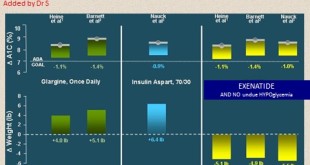
This week we continue with Part 4 of our series of Homerun Slides on Pathophysiology in the Treatment of Type 2 Diabetes: Newer Agents. Slides this week cover Exenatide, a synthetic version of Exendin-4 which is found in the saliva of the Gila monster….
Read More »Letter from the Editor: Prescription Drug Approval and Public Perception
As we grapple with the burgeoning diabetes problem we often have a less than favorable opinion as medical professionals of seemingly endless tests that the FDA requires for new drug and device approvals. Now a new study by Lisa M. Schwartz, MD, MS, and Steven Woloshin, MD, MS, published in …
Read More »The Best from the 47th Annual Meeting of the European Association for the Study of Diabetes, Lisbon, Portugal.
The Best from the 47th Annual Meeting of the European Association for the Study of Diabetes, Lisbon, Portugal. See all of our coverage on the 47th EASD from the details on the latest diabetes figures worldwide to the potential of a new Once-A-Year diabetes medication.
Read More »Communicating Uncertainties About Prescription Drugs to the Public
A National Randomized Trial Lisa M. Schwartz, MD, MS; Steven Woloshin, MD, MS Background Many new drugs are aggressively promoted. The public may not realize that even with US Food and Drug Administration (FDA) approval, important uncertainties about the benefits and harms of these drugs remain. We assessed the US …
Read More »Once-A-Year Non-Injectable Byetta

Once-A-Year Non-Injectable Byetta The DUROS delivery system aims to reshape the way diabetes is treated by offering patients and their health care providers with a more convenient long term treatment regiment. The result is the investigational treatment now in late stage development — ITCA 650. As part of a robust …
Read More »Public Knows about Diabetes, Takes No Action
Americans are well informed about the risks, dangers, and signs of diabetes — but that knowledge does not appear to translate into actions to prevent or control the disease, researchers reported. Almost 87% of the 3,867 type 2 diabetes respondents in a huge national sampling knew that obesity contributes to …
Read More »Alcohol-related Deaths Up in Type 1 Diabetes
Survival rates in patients with early-onset type 1 diabetes have improved in recent years, whereas survival in patients with late-onset type 1 diabetes has become worse since the 1980s. The trend appears to be a result of increases in drug- and alcohol-related deaths in patients with late-onset type 1 diabetes. …
Read More »